
Your Brand Should Survive Your Silence
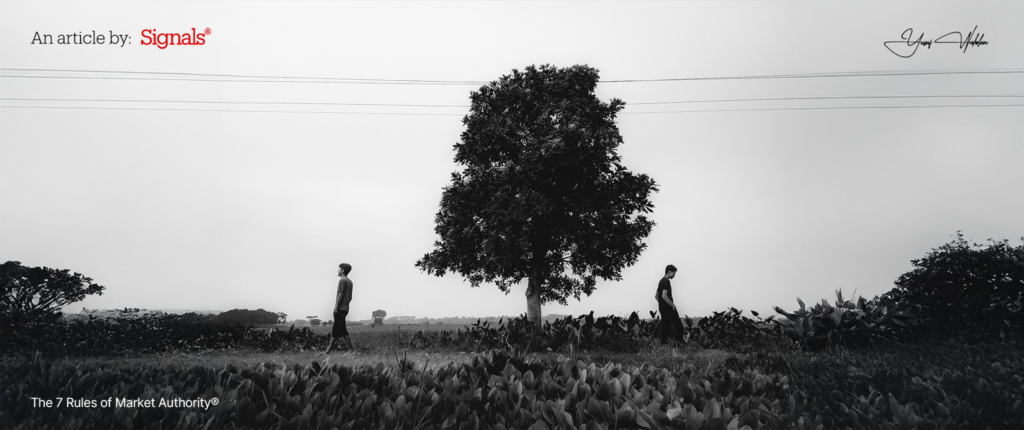
Two founders recently took time away from their businesses. One spent a week off-grid in a remote town, surrounded by organic farms and with little reason to open her laptop. She posted nothing and made no effort to remind the market that she was still there. During that week, enquiries continued to arrive and her pipeline remained healthy.
The other founder went camping in Kenya. She had planned to stay offline, but within three days she felt the pressure to return. Engagement had slowed, leads were drying up and the business appeared to lose momentum as soon as she stopped showing up.
From the outside, their brands looked remarkably similar. Both had an audience, published regularly and seemed to have built successful businesses around their expertise. The difference only became visible when they stepped away. One had developed a business capable of carrying momentum forward, while the other was still responsible for creating that momentum every day.
When the Founder Becomes the Entire System
Many personal brands are built around a pattern of constant presence. The founder publishes, responds, follows up, explains the offer and reassures every potential client personally. As long as she remains active, the business appears to work. When she becomes quiet, everything slows down with her.
Over time, this creates a strange kind of success. The audience may grow and the revenue may improve, yet the founder feels increasingly trapped by the business she has built. Every new client adds work, every new platform adds pressure and every period of rest begins to feel commercially dangerous.
The problem rarely comes from a lack of commitment. Most founders in this position are already working hard. Their exhaustion comes from the number of decisions and actions that still depend on them. They are carrying the sales process, the brand story, the client experience and the delivery model in their heads, which leaves the business with very little ability to operate independently.
Brand architecture begins by organising these elements into a structure that can hold together under pressure. It gives the market a clear understanding of what the founder represents, connects the offer to a recognisable problem and creates a reliable path from discovery to enquiry. The founder’s voice remains important, but it no longer has to perform every commercial function at once.
A strong personal brand should continue creating value after the founder has finished speaking. An article can answer a question before a sales call. A clear offer can help a prospect recognise whether the service is right for them. A thoughtful client journey can build trust without requiring a personal explanation at every stage. Together, these elements allow the business to benefit from work that has already been done.
Why More Content Often Creates More Pressure
When growth slows, the usual response is to produce more content. The founder adds another platform, increases the posting schedule or hires someone to help maintain visibility. Activity rises quickly, but the underlying pressure often remains because the business still has no dependable way to turn attention into commercial momentum.
Content can attract interest, but it cannot compensate for an unclear position or a disconnected offer. If people enjoy what you publish but cannot explain what you help them achieve, attention remains difficult to convert. The same happens when your services feel like a collection of unrelated tasks. Prospects may appreciate your expertise while still struggling to understand what they should hire you for.
Useful infrastructure connects each part of that journey. It helps the right people discover your work, understand its relevance, recognise the value of your offer and take an appropriate next step. Building that infrastructure does not require a complicated collection of automations. It begins with clarity about the commercial role your brand is meant to play.
That principle sits at the heart of the Million Brand Method™. The aim is to develop a connected business ecosystem in which positioning, content, offers, relationships and delivery strengthen one another. When those parts are designed together, the business gradually builds equity through its reputation, intellectual property and accumulated trust. Revenue no longer depends entirely on what the founder can produce during a particular week.

Find the Pattern Behind the Work
A useful place to begin is with the last five requests you received from clients. Write them down in the language your clients used and look beyond the individual tasks. Repeated requests often reveal a broader area of trust that the market already associates with you.
A strategist may be asked to rewrite a website, clarify a pitch deck and improve a founder’s LinkedIn content. On paper, these appear to be three separate assignments. Underneath them, however, sits a common problem: the business is struggling to express its value clearly enough for the market to understand and trust it.
Once you identify that pattern, group the work into two or three strategic themes. They might relate to authority, conversion, growth, customer experience or operational clarity. These themes help you see the commercial contribution behind the work rather than viewing every request as an isolated project.
The next step is to describe the transformation in language that reflects the result. Someone who writes content may be helping founders turn expertise into authority. Someone who manages social media may be creating a clearer path from audience attention to qualified enquiries. Someone who improves internal processes may be reducing the company’s dependence on the founder.
This shift makes it easier to build an offer around a meaningful outcome. Clients can understand the problem being solved, the progress they can expect and the value of the engagement beyond the hours involved. It also gives the founder a clearer basis for deciding which work belongs inside the offer and which requests are pulling the business in an unhelpful direction.
Delegation becomes more effective after this thinking has been clarified. A team member needs more than a list of tasks; they need to understand the principles behind the decisions. Documenting those principles allows judgement to travel through the business instead of remaining locked inside the founder’s mind.
Over time, the brand becomes less dependent on constant performance. Past ideas continue to educate people, previous results provide evidence, referrals arrive with stronger context and the offer becomes easier to understand. The founder can still choose to be visible, but visibility becomes a strategic contribution rather than a daily act of maintenance.
The real measure of a brand is not how much attention it receives while the founder is speaking. It is how much meaning, trust and momentum remain after she becomes quiet.
That is the foundation of the Business Flywheel Way.
Turn insight into a stronger market signal.
Join Signals® for practical brand intelligence, or continue exploring the latest thinking.